
[4 Moons] How Four Phases of the Moon Illuminate the Closet and Queer Love

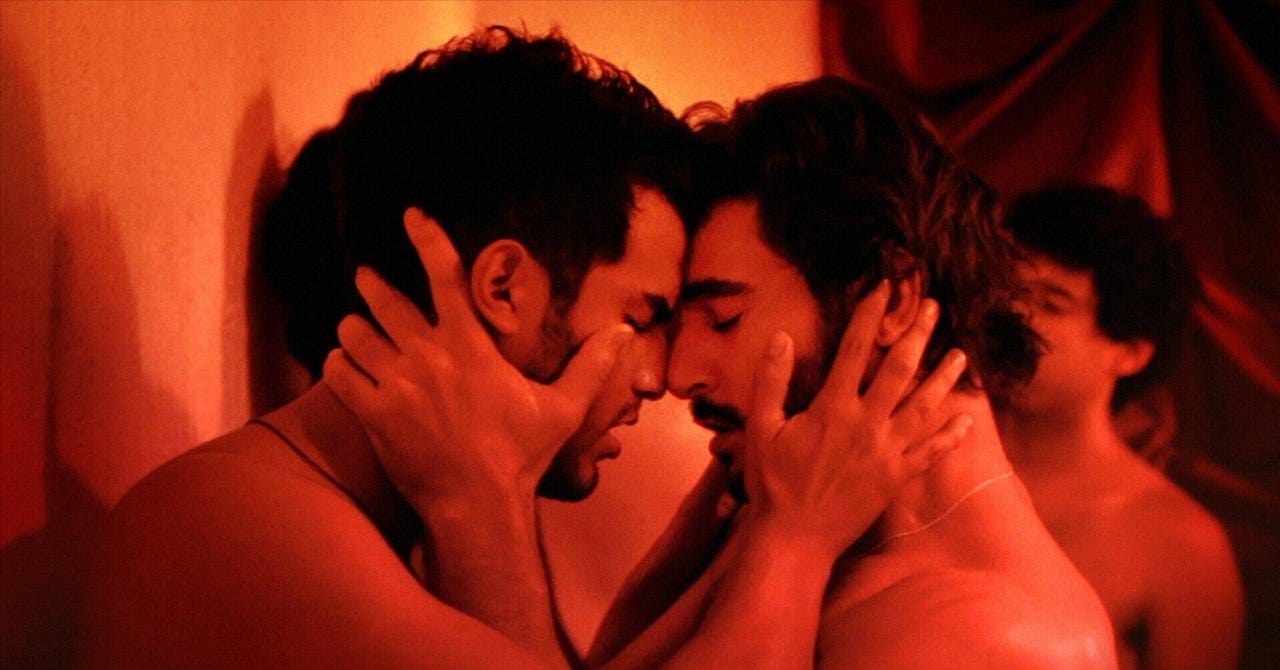
Let’s talk about the Mexican film “Four Moons” (original title: Cuatro lunas).
There are plenty of LGBTQ+ films out there, but “Four Moons” is one of those rare titles that doesn’t live on big twists or melodrama. Instead, it stays very close to what I’d call the “room temperature” of queer life: small choices, awkward conversations, tiny acts of courage. It’s the kind of film that quietly lingers with you long after the credits.
In this essay, I’m looking at “Four Moons” explicitly from a gay male perspective. My frame is simple: the four moons = four life stages of gay men. Awakenings in childhood, first love between young men, the slow erosion of a long-term relationship, and late-life desire that never really went away. Most queer men, I suspect, will find at least one of these “moons” uncomfortably familiar.
A quick overview of “Four Moons”
“Four Moons” is a 2014 Mexican film directed by Sergio Tovar Velarde. As the English title suggests, the narrative is structured around the four phases of the moon. Each “moon” corresponds to a different story about gay men at different ages and stages.
The four storylines never really intersect in a neat “ensemble drama” way. Instead, we watch them in parallel:
an eleven-year-old boy,
two college-age men,
a couple who have been together for a decade,
and an older poet with a wife, children, and grandchildren.
They all live in the same wider society but in different corners of it, each carrying their own mix of desire, fear, shame, and resignation. That sense of parallel lives – close but not touching – feels strangely true to queer experience: you know other people are out there wrestling with similar things, yet most of the time you’re dealing with your own in private.
In what follows, I’ll walk through each of the four stories as a kind of queer life stage, and then zoom out to think about what they say about culture and self-acceptance beyond Mexico – including in places shaped less by Catholicism and more by family expectations, “respectability,” or social conformity.
Beyond Mexico: why this feels familiar even if you’re not Latin American
On paper, “Four Moons” is deeply rooted in Mexico: Catholicism, machismo, extended families, Spanish language, Mexico City as a gay-ish metropolis surrounded by more conservative regions.
But if you come from a different context – say, an East Asian country shaped more by “saving face” and social conformity than by church doctrine, or a Western society where family expectations still quietly dictate the script – the emotional architecture is recognizable.
Instead of a priest, you might have grown up with teachers or relatives telling you “it’s just a phase.”
Instead of machismo, you might have had “be normal,” “don’t make trouble,” or “think about your parents” drilled into you.
Across all of that, there are recurring waypoints in many gay men’s lives:
that first, unnamable secret,
the first relationship where “I love you” and “I’m not ready to tell anyone” collide,
the pressure cooker of a long-term relationship in a world that doesn’t always validate it,
and the haunting question, even decades in: “What would my life have been if I’d been free earlier?”
“Four Moons” isn’t trying to be a universal statement for all queer people everywhere. But it does manage to tap into something that echoes across borders: the way self-acceptance is rarely a single moment, and more often a long, messy, circling journey.
From here on, the section contains spoilers that touch upon the plot development and ending.
